
MACHINERY REGULATION (EU) 2023/1230 · CYBER RESILIENCE ACT

Machinery Regulation and CRA: your machine’s cybersecurity in one package

The Machinery Regulation (EU) 2023/1230 applies from 20 January 2027 and replaces the Machinery Directive. It adds requirements against tampering with software, data and controls. If the machine has a data connection, the Cyber Resilience Act applies on top. We assess for free how far both regulations reach your machine, then implement both in one project.

Quick and free:CRA product check

No transition period. Every machine placed on the market from 20 January 2027 must meet the new Regulation, even if you have built the type for years.

ReferencesT-Systems · Rowan Legal

Leave your number, I'll call you

Krystof Olik · founder and CEO

Same working day (CET), otherwise the next working morning.

Or email me directly at info@ollsoft.ai

We use your details only for this request. Privacy
Machinery Regulation
applies from 20 Jan 2027 (Art. 54, corrected in OJ L 169 of 4 Jul 2023)
CRA reporting
since 11 Sep 2026, also for connected machines in the field
CRA in full
11 Dec 2027 (CRA Art. 71)
Version log
safety software updates traceable for 5 years (Annex III, 1.2.1(f))

CRA updates by email. Once a month: what changed and what it means for your machines.

PricingAssessment: freeImplementation: from €9,900CVE watch: from €390 per monthFull offer

Why Ollsoft?

We built the CRA compliance platform for T-Systems ourselves, and the CVE watch for your machines runs on our own CRA testing tool.

  • we implement the Machinery Regulation and the CRA for your machine type in one project
  • we work directly with your design and software teams, not through questionnaires
  • we do the technical work and prepare processes and documentation; lawyers at our partner firm Rowan Legal validate them and prepare the contracts
  • we also prepared Olingo Medical and Lumii for the CRA
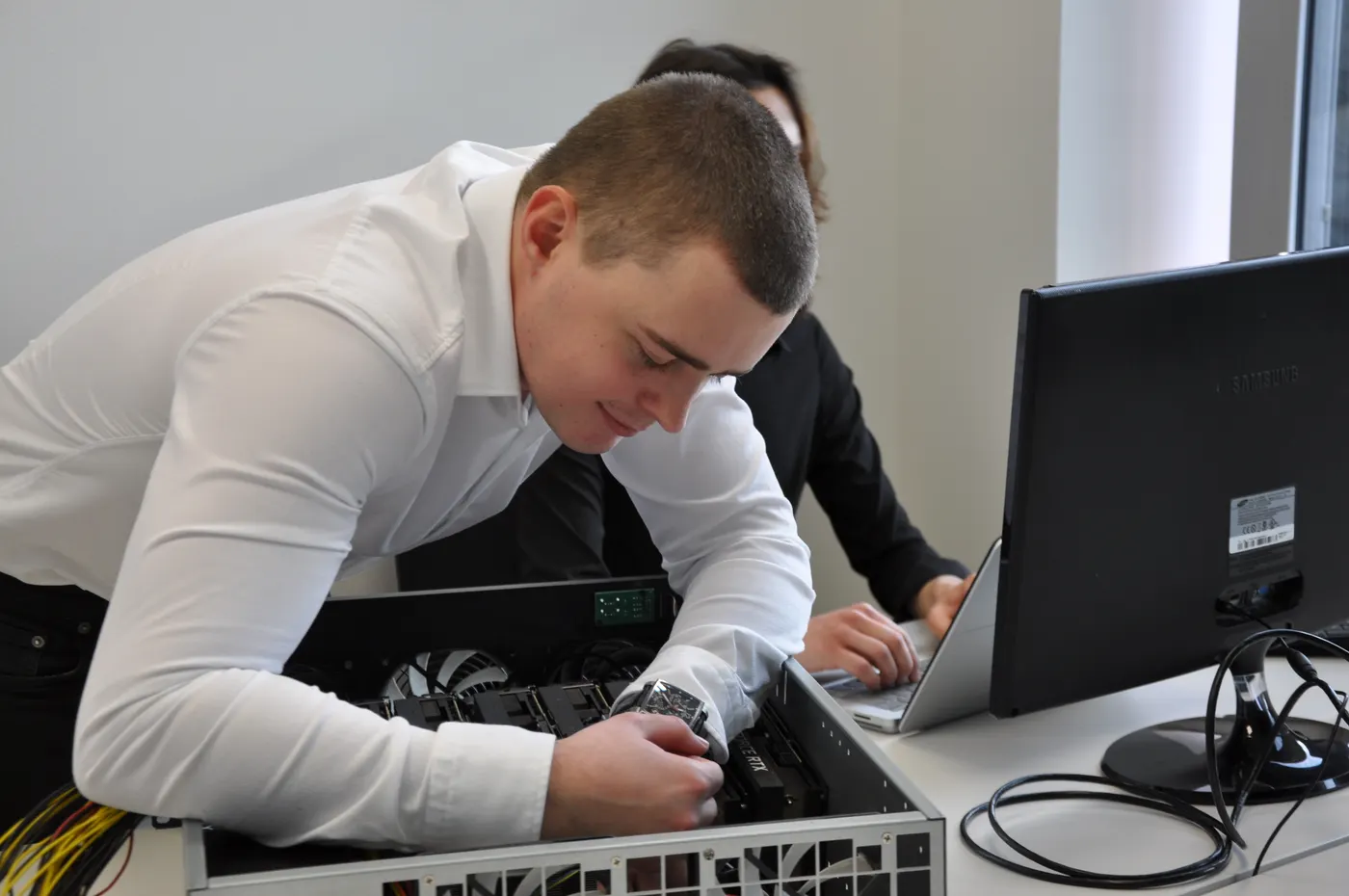
An Ollsoft engineer leaning over an open server, working on the hardware

What does the Machinery Regulation require on cybersecurity?

Annex III section 1.1.9, protection against corruption, explicitly requires protection against tampering for the first time.

  • connecting another device, including remotely, must not create a hazardous situation
  • safety-critical software and data are identified as such and protected against accidental or intentional corruption
  • hardware transmitting signals or data to that software is protected, and the machine records interventions in it
  • the machine identifies the software installed for its safe operation and provides that information at all times in an easily accessible form
  • it collects evidence of legitimate and illegitimate interventions in software and configuration

What changes for control systems (1.2.1)?

Control systems must withstand reasonably foreseeable malicious attempts by third parties that lead to a hazardous situation.

  • interventions and safety software versions uploaded after placing on the market are logged for 5 years
  • the log serves only to demonstrate conformity upon a reasoned request from an authority
  • for control systems with self-evolving behaviour, safety-related decision-making data are kept for 1 year
  • safety components and embedded systems with self-evolving, machine-learning behaviour that ensure safety functions need third-party assessment (Annex I Part A, points 5 and 6)

When does the CRA apply to my machine as well?

As soon as the machine exchanges data with a device or network: then, as a product with digital elements, it falls under the CRA and must meet both regulations (CRA Art. 2(1) and recital 53).

  • typically via Ethernet, fieldbus, remote maintenance, cloud or USB
  • implementing the CRA can support 1.1.9 and 1.2.1 if you demonstrate the link
  • cloud processing you develop that is part of the machine’s function, such as image analysis for a robot, is part of the product and of your risk assessment (Commission guidance, section 8.3.4)

Does this apply to machines already at customers?

The Machinery Regulation does not, CRA reporting does.

  • machines placed on the market under the Directive before 20 January 2027 may still be made available (Art. 52)
  • CRA reporting has applied since 11 September 2026 also to connected machines already sold (CRA Art. 69(3))
  • if a vulnerability in a machine you sold is actively exploited, you report within 24 hours

Why one package instead of two projects?

Both regulations ask for the same building blocks from two angles, and we build each only once.

  • one risk assessment covering safety and security, aligned with your EN ISO 12100 assessment
  • one software inventory serving 1.1.9 and the CRA SBOM
  • one concept for integrity protection, access and remote maintenance
  • one intervention and version log for 1.1.9, 1.2.1 and CRA Annex I logging
  • building blocks for the technical documentation of both regulations

OFFER

From a free initial assessment to operation

Step 1 · Start here

Machine cyber assessment in 5 working days

For one machine type you know how far both regulations reach you and where the main gaps are.

Free

What you get

  • 60 minutes with your design and controls engineers, no access to code or systems
  • CRA scope, class and reporting duty for machines in the field
  • main gaps against Annex III 1.1.9 and 1.2.1 and CRA Annex I
  • written summary and a fixed price for implementation
Get the free initial assessment

Step 2

Machinery Regulation and CRA in 8 weeks

For one machine type: risk assessment, protection concept, logging and documentation for both regulations.

from €9,900excl. VAT, one-off

What you get

  • detailed review of software, controls and infrastructure: SBOM, vulnerabilities and gaps with exact locations
  • security part of the risk assessment, aligned with EN ISO 12100
  • inventory of safety-relevant software and SBOM
  • concept for integrity, access and remote maintenance
  • intervention and version log per 1.1.9 and 1.2.1(f)
  • vulnerability handling and CRA Art. 14 reporting process
  • documentation building blocks for both regulations
Request a quote

Step 3

CVE watch for your machines

New vulnerabilities in your machines’ software are triaged before customers ask.

from €390 per monthexcl. VAT

What you get

  • SBOM per machine type and software release
  • daily matching against new CVEs and exploited lists
  • triage of every match as OpenVEX
  • help with reports and customer notices
Request a quote

GUARANTEE

8 weeks, or we keep working for free

If the risk assessment, protection concept and documentation building blocks are not finished 8 weeks after we receive your input, we keep working at no extra cost until they are. Applies to "Machinery Regulation and CRA in 8 weeks".

Get the free initial assessment

Leave your number, I'll call you

Krystof Olik · founder and CEO

Same working day (CET), otherwise the next working morning.

Or email me directly at info@ollsoft.ai

We use your details only for this request. Privacy

PROCESS

How it works

  1. 01

    A short call

    Machine type, controls, interfaces, remote maintenance. No access to code or systems.

  2. 02

    Initial assessment in 5 working days

    In writing: how far the regulations reach you, the main gaps and a fixed price.

  3. 03

    Implementation in 8 weeks

    Review of software and controls, with your design and software teams, weekly status.

  4. 04

    Operation

    CVE watch, help with reports, documentation upkeep.

REFERENCES

References and partners

T-Systems

We built the CRA compliance platform for T-Systems: requirements as testable controls, software linked to its git repositories, SBOM and vulnerability matching on every push, triage of new CVEs as OpenVEX.

Rowan Legal

Our partner law firm for NIS2 and CRA: we do the technical work and prepare processes and documentation, its lawyers validate them and prepare the contracts. We also built AI for the firm that runs on its own servers, with no external APIs.

rowan.legal

CONTACT

Get one machine type assessed for free

Within 5 working days of the call you get, in writing, the assessment, the main gaps against both regulations and a fixed price for implementation. No access to code or systems, free, no commitment.

Leave your number, I'll call you

Krystof Olik · founder and CEO

Same working day (CET), otherwise the next working morning.

Or email me directly at info@ollsoft.ai

We use your details only for this request. Privacy

FAQ

What clients ask us

Usually not. Annexes III and IV do not list machines, and integrated components such as a real-time OS or a switch do not change the machine’s class (CRA Art. 7(1)). Self-assessment usually applies.

You, for the machine as a whole. Bought-in components with digital elements, such as a PLC, fall under the CRA at their own manufacturer; you must select and integrate them with due diligence (CRA Art. 13(5)).

Under the Machinery Regulation only for Annex I categories: always for Part A, and for Part B unless you fully apply harmonized standards. Under the CRA only if the core function falls in Annex III or IV.

The initial assessment is free. Implementation for one machine type starts at €9,900 excl. VAT, depending on controls, interfaces and existing documentation. You get the fixed price in writing with the assessment.

No. We are engineers who prepare the concept, implementation and documentation. Third-party assessment is done by a notified body; legal review stays with your counsel, or lawyers at our partner firm Rowan Legal can do it.

Newsletter

CRA updates by email

The CRA keeps being filled in: Commission guidance, harmonised standards, notified bodies. Once a month, and whenever something important changes, we send a short overview of what changed and what it means for your machines.